Crate handling
Review crate length, width, height, openings, handles and loading orientation. Confirm guides, operator access and change parts for every planned format.
RETURNABLE FOOD CONTAINERS
Plan a crate washing machine around your returnable containers, residue, acceptable cleaned output and dirty-to-clean handling route. Review the actual crate before comparing automation or price.
PROCESS BEFORE MACHINES
The Anbang catalog shows a conveyor-fed spray washer for food turnover baskets and boxes, with air drying or drying discussed as configurable options. Confirm the actual container geometry, residue and required exit condition; do not assume every crate fits the same guides or cleaning arrangement.
That is why this page explains the selection logic without publishing unconfirmed capacity, energy or price figures.
FROM THE ANBANG PRODUCT CATALOG
This original catalog image is not a customer installation photograph or a dimensioned factory layout.
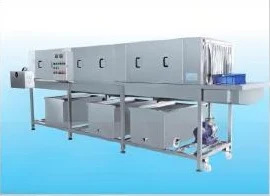
RETURNABLE CRATES / SPRAY WASHING
This machine image appears in the turnover-basket washing section of the company catalog. The supplied guides, cleaning stages and drying options are confirmed for your actual containers.
Before quotationSend crate dimensions and samples, residue photographs, acceptable cleaned output, loading arrangement, drying needs and factory utilities.
Discuss this configurationTYPICAL PROCESS FLOW
The exact route is confirmed after the product and plant brief. Optional steps may be added, removed or adjusted.
CONFIGURATION LOGIC
Each module should support the steps before and after it. Selection is based on your confirmed product route rather than a generic machine list.
Review crate length, width, height, openings, handles and loading orientation. Confirm guides, operator access and change parts for every planned format.
Review spray access to internal surfaces, corners and the underside using representative dirty crates. Define the required cleaning result before confirming the arrangement.
Confirm debris collection, screens, water replacement, access for cleaning and wastewater connections. A pump or screen is not evidence of hygienic water quality.
Define acceptable residual water and the next handling step. Ask whether drainage, air removal, drying and connecting conveyors are included or optional.
SAMPLE, FLOW & ACCEPTANCE
Use representative containers and difficult incoming residue to agree the checks and quotation boundary.
Supply photographs of corners, underside, openings, handles and any labels. List normal and difficult residue and its condition before washing. Keep cracked or unsuitable containers separate; washing does not repair them.
Provide water supply and quality information, available heating and power, drains and wastewater limits. Share the dirty receiving and clean discharge layout. Request the selected machine's utility schedule and clarify who supplies heating, drainage and connecting conveyors.
Agree cleanliness checks, residual-water limits and an operating period. Record loading staff, stops, rejects and format changes. If the next stage needs a drier crate, specify that result rather than assuming a drying option is included.
Cleaning a reusable container is a different task from cleaning produce. Use the fruit and vegetable washing guide for raw-material handling, and keep its product brief separate.
BEFORE MACHINE SELECTION
Share what you already know. If any field is not decided, Anbang can list the options that need confirmation.
CAPACITY & PRICE
Compare crate washing machine quotations using the same container formats, incoming residue and acceptable output definition. Ask for an itemized scope covering loading guides, spray stages, water and debris handling, heating interfaces, rinsing or drying if required, controls, conveyors, installation and training. Dimensions, capacity and utility loads remain subject to the confirmed configuration.
Anbang provides a project-specific recommendation after these inputs are reviewed.
BUYER QUESTIONS
Review every size and material with actual samples or drawings. Ask which guides or parts change, the loading orientation and the expected cleaning access. Do not assume that external width alone proves compatibility.
Send crate drawings and photographs, materials, size range, openings and handles, residue, required acceptable crates per shift, productive hours, changeovers, loading staff, water and heating supply, drainage, layout, country, budget and timeline.
Use acceptable cleaned crates per productive shift for the same format, residue and exit condition. Include loading, sorting, water replacement, cleaning stops, changeovers and downstream handling. Conveyor speed alone does not establish successful cleaning output.
Identify labels, adhesives and other difficult residue separately. Ask the supplier to evaluate representative samples and define any additional stage or manual work. General spray cleaning is not a label-removal guarantee.
The company catalog discusses air drying or drying as configurable options. State the allowable residual water and the next use of the crate, then confirm the selected option and its utility requirements in the written quotation.
No. Visible cleanliness and microbiological acceptance are different requirements. Have qualified specialists define and validate the hygiene controls for your application; this guide does not prescribe chemical doses, temperatures or disinfecting cycles.
Provide conveyor heights, transfer direction, crate spacing, accumulation needs and stop/start interfaces. Keep the dirty receiving and clean discharge routes distinct in the proposed layout and confirm the responsibility for connecting equipment.
Record crate format, residue and incoming condition, agreed acceptance checks, acceptable and rejected crates, operating period, staff, stoppages and residual water. Identify untested formats and demonstrate the agreed format change; a short clean-crate video is not a production acceptance record.
START WITH YOUR PROCESS
The prepared message asks for the details needed to discuss a practical configuration and quotation.